
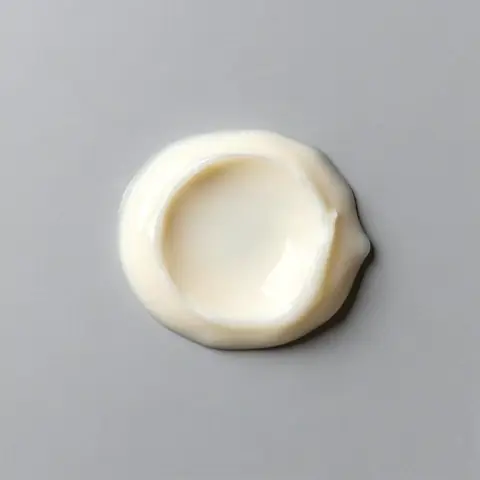
 Illustrative
Eye Balm
Balm
Ask about this formulaProduct
Eye creams, balms, serums, gels and patches. The eye area is the most sensitive skin on the face, so formula, packaging and claims are all planned around it from the first sample.
Eye products are small in volume and high in expectations: the customer applies them to thin skin close to the eyes, often twice a day. With our partner manufacturers we make:
If you want a full-face cream with an eye cream alongside it, the face cream is covered on moisturizer and cream. Sheet masks and other masks are on sheet mask and pack, where the same patch and mask minimums apply.
| Product | Minimum per SKU | What you get |
|---|---|---|
| Eye cream, eye balm, eye serum or gel, your own formula (OEM / ODM) | 1,000 units | A formula developed for your brief, or one of ours adjusted for texture, actives or scent, in your choice of container. Quoted per project |
| Ready eye formula at 300 units | Not available | The 300-unit route covers four ready face skincare formulas only |
| Hydrogel eye patches | 300,000 units | The partner line's smallest batch; cannot be reduced |
| Other eye patches | 50,000 units | Patch formats outside hydrogel; cannot be reduced |
The patch minimums are high because patches run on dedicated lines set up for large batches, while an eye cream is filled on the same kind of line as other skincare. If your launch plan is under 300,000 hydrogel patches, the usual answer is to start with an eye cream or serum at 1,000 units and add patches once volume is proven.
Samples cost USD 150 per round and are credited in full when you order. Production runs on a 50% deposit, with the balance before shipment. Development fees and container sourcing are quoted per project.
These are the eye briefs we receive most often. We can formulate all of them; what changes is what you need to decide before the first sample.
| Brief | What to decide early |
|---|---|
| Peptide eye cream | Which peptides and at what level, and the claim you want to make on the carton |
| Caffeine eye serum or gel | Gel or serum texture, and whether it goes in a tube with a metal tip or a roller |
| Retinol eye cream | The retinol level for each market; the EU sets a limit (see below) and requires a label warning |
| Niacinamide eye cream | The level and the texture; often combined with peptides in one formula |
| Collagen eye cream | The source and grade of collagen, and how it appears in the ingredient list |
| PDRN eye cream or serum | The source of the PDRN and its supporting documents |
| Centella eye balm | Balm or cream, and whether the brief is soothing or barrier care |
| Ginseng eye cream | Ginseng extract type and level; a frequent brief from Asia and the Gulf |
Two practical points apply to every eye brief. First, the fill is small, usually 15 to 30 ml, so the cost per unit is driven more by the container than by the formula. Second, texture matters more than usual: a cream that is pleasant on the cheek can feel heavy under the eye or migrate into the eye. Plan on at least one sample round of about 2 weeks and a second if the texture needs adjusting.
Under EU Regulation (EC) No 1223/2009, the safety report must describe the relevant characteristics of the packaging material, in particular its purity and stability, so the container you choose becomes part of the product's documentation.
The regulatory page lists what we prepare for each market. For export we provide the MSDS, ingredient list, COA and free sale certificate.
Inquiry, quotation, sample, design, contract on a 50% deposit, production with a golden sample, export. The full sequence is on the process page. For eye products, the container and any metal tip or airless component are confirmed at the quotation stage, because their lead time can be longer than the formula's. Package design is available for USD 200.
From our sample library. Images are illustrative textures, not photos of the samples. Name any of these in your brief, and we can adjust it for your texture, actives or market.
Images show an illustrative texture for each formula type, generated for this catalogue. They are not photos of the actual samples. Ask us for photos or physical samples of any formula.
IllustrativeBalm
Ask about this formula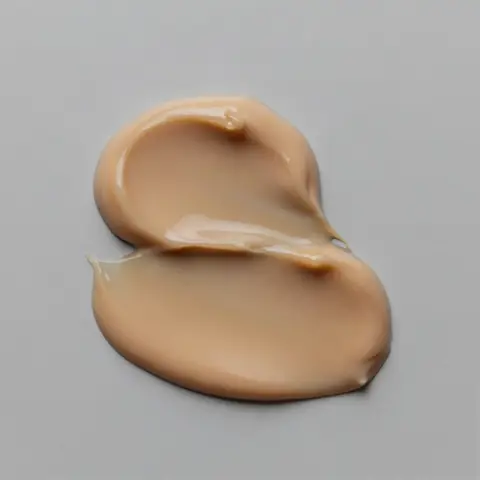 Illustrative
Rich cream
Ask about this formula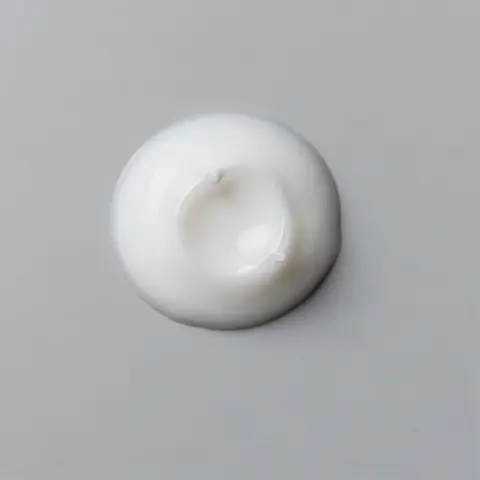 Illustrative
Rich cream
Ask about this formula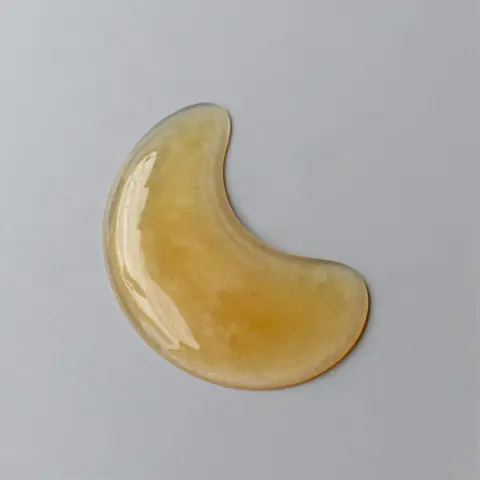 Illustrative
Gel patch
Ask about this formula1,000 units per SKU with your own formula, either developed for your brief or adjusted from one we have already made. The same minimum applies to eye balms, serums and gels.
No. The 300-unit route covers four ready face skincare formulas only: a toner, essence, ampoule and cream. An eye product starts at 1,000 units.
300,000 units, and it cannot be reduced. Other eye patch formats start at 50,000 units.
Yes, once the product has passed an in-use study supervised by an ophthalmologist. We arrange the study through a testing laboratory, quoted at cost, and the claim is used only if the results are favourable.
Yes, within the EU limit of 0.3% retinol equivalent for leave-on products other than body lotion, and with the "Contains Vitamin A" warning on the label.
Yes. Metal-tip tubes and pumps are available as standard components or as your own containers, which we test for compatibility before filling. Confirm the tip early, because its lead time can be longer than the formula's.
Send your eye brief with the texture, actives, container and quantity for a quote within 24 hours: get a quote, or start with samples.
Send the product, market and quantity. You get a written quote and a formula route within 24 hours.
Last updated