
Blog
Notes from the overseas sales desk
One question per article, answered with numbers and sources. New articles are added as buyers ask new questions.
 Illustrative image
Barrier-care skincare: why ceramide, panthenol and amino acids work as a team
Ceramides, panthenol and amino acids each fix a different part of a weak skin barrier. How to build a barrier range, and 4 ready formulas from 300 units.
 Illustrative image
How to write a cosmetic product brief: 6 parts and a one-page template
A cosmetic product brief needs 6 parts: market, texture, ingredients and claims, packaging, quantity and deadline, reference products. Template included.
 Illustrative image
How much does it cost to start a skincare line in Korea? Three budgets, from one product to four
3 budgets for a Korean-made skincare line: 1 SKU at 300 units from $2,385, 2 SKUs at 500 from $7,025, 4 SKUs at 1,000 for $26,650 FOB Korea, and what is extra.
 Illustrative image
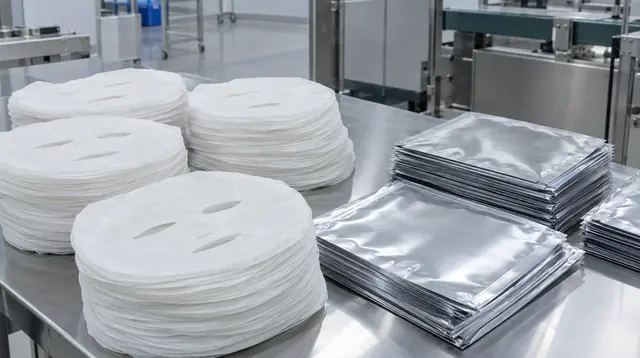
Why is the sheet mask MOQ 25,000 units? The line explains it
Sheet masks need 25,000 units per SKU at BIGPIE C&T and hydrogel eye patches 300,000. The line steps that set those minimums, and the 5,000-unit alternatives.
 Illustrative image
How do you choose a Korean skincare manufacturer without visiting 34 factories?
6 criteria for choosing a Korean skincare manufacturer: categories, MOQ, documents, references, communication, IP. Single factory vs network, and 7 red flags.
 Illustrative image
How do you import Korean cosmetics? A step-by-step importer's checklist
Importer's checklist for Korean cosmetics: HS 3304, FTA origin proof, registration by market, 8 documents we provide, EXW/FOB/DAP, 50/50 payment.
 Illustrative image
How do you price a private label skincare product? From FOB unit cost to the shelf
Price a private label toner and cream from $6.32 and $6.82 per unit at 1,000 units: add samples, design, registration and freight, then test 3 retail scenarios.
Is a private label skincare brand profitable? The unit economics of one toner, from 300 to 5,000 units
Unit economics for a private label toner at 300, 1,000 and 5,000 units: FOB cost, retail multiples, Amazon and retailer fees, break-even units and cash tied up.
 Illustrative image
Where is K-beauty selling in 2026, and which market should you start in?
Korean cosmetics exports reached about USD 11.4 billion in 2025 and the US is now the top destination. What each market asks of a new brand, and where to start.
 Illustrative image
Which K-beauty ingredient trends of 2026 can you actually put in a product? Sorted by minimum order
9 K-beauty ingredient trends for 2026, from PDRN and exosomes to glutathione and retinal, sorted by the minimum order each needs: 300 or 1,000 units.
 Illustrative image
K-beauty in Poland: channels, shoppers and what you need before you sell
Poland is a 0%-duty EU market for Korean cosmetics, with a Polish label rule and EU paperwork. Channels, what shoppers expect, and a 300-unit entry plan.
 Illustrative image
How do you launch a K-beauty private label brand in Dubai and the UAE?
Korean skincare in the UAE: Montaji registration in Dubai, GSO 1943 Arabic labels, 5% duty plus 5% VAT, halal requests. Routes from 300, 1,000 and 5,000 units.
 Illustrative image
What does an Amazon seller need from a Korean manufacturer before the first listing?
What Amazon sellers need from a Korean manufacturer: MoCRA listing data, COA, INCI list, label and carton specs. Barcodes and FBA prep are yours.
 Illustrative image
What does Korean skincare OEM cost at 1,000 units? Your own formula, compared with private label
From 1,000 units you get your own Korean skincare formula, new or adjusted, quoted per project. Private label at 1,000: $6.32 to $7.18 per unit FOB.
 Illustrative image
Korean or Chinese skincare manufacturer? The 7 questions buyers ask us, answered straight
7 questions buyers ask when comparing Korean and Chinese skincare manufacturers, answered straight: price, 300-unit MOQ, formulas, documents, EU and US rules.
 Illustrative image
Why can private label skincare start at 300 units, and why can't everything? The conditions behind a low MOQ
300 units works for 4 ready Korean formulas: formula exists, standard container, label branding. 7 price tiers; masks and sunscreen keep high minimums.
 Illustrative image
Can a creator launch a skincare product with 300 units? Yes, and here is what you need to bring
A creator can launch Korean-made skincare with 300 units of 1 of 4 ready formulas, from $2,385 FOB Korea, in about 3 to 4 months from samples to delivery.
 Illustrative image
What is cosmetic GMP, and what are the 6 quality checks on your order?
Every BIGPIE C&T order is checked at 6 stages, from raw material to shipment, at one of 34 partner manufacturers. What each check covers, and what CGMP means.
 Illustrative image
How long does it take to develop a skincare product in Korea? The timeline by stage
From brief to shipment in about 3 to 4.5 months: 24-hour reply, sample rounds of about 2 weeks, production in 2 to 3 months. What makes a project late.
 Illustrative image
What do stability, challenge and compatibility tests check, and when do they run?
3 tests sit between sample and production: stability, challenge and compatibility (CT). What each checks, when it runs and why your own bottles need a CT.
 Illustrative image
Should an esthetician or clinic start its own skincare brand? Barrier care, 300 units, no medical claims
An esthetician or clinic can retail its own barrier-care line from 300 units per product, using 4 ready Korean formulas. Cosmetic claims only; EU and US rules.
 Illustrative image
How do you start a skincare brand in Germany with a Korean manufacturer?
Germany is 22% of our sample log. What a German brand needs from Korea: EU Responsible Person, PIF, CPSR, CPNP, German label, duty-free under the EU–Korea FTA.
What is the least you can spend to launch a skincare brand? Three small-budget plans, priced from our list
The least you can spend on a real skincare brand: 300 toners for $2,385 FOB Korea, 2 products from $4,773, the 4-step routine for $10,056, and what to postpone.
 Illustrative image
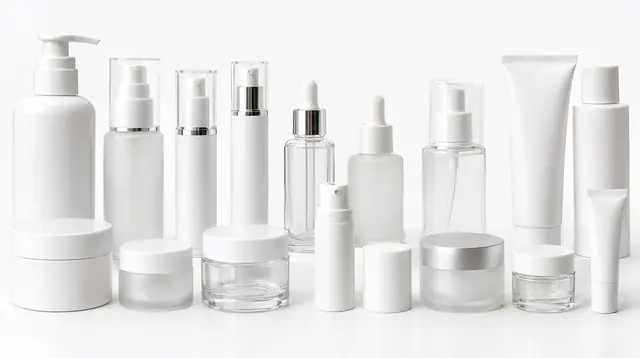
Stock or custom packaging: how to keep your first order small
Packaging, not the formula, usually sets your minimum. Stock containers work from 300 units, direct print from 1,000, custom-printed containers from 5,000.
 Illustrative image
What do vegan and cruelty-free claims require before they go on a label?
Vegan and cruelty-free are claims, not ingredients: what each means, why they need third-party substantiation, and the EU's 6 claim criteria.
 Illustrative image
What is a CPNP number, and what does it prove? A notification, not an approval
A CPNP number is issued when an EU Responsible Person notifies a cosmetic under Article 13 of Regulation 1223/2009. It confirms notification, not approval.
 Illustrative image
White label or private label skincare: which one are you actually buying?
White label is a ready product many brands sell unchanged; private label is made for one brand. Our 300-unit route is the first; your own formula from 1,000.
 Illustrative image
Why do so many brands manufacture their skincare in Korea? Four reasons, and one caveat
4 reasons brands make skincare in Korea: a record export year in 2024, a formula culture built on fast cycles, a supplier network and minimums from 300 units.
 Illustrative image
Why does sunscreen for the US need 10,000 units when other markets need 5,000?
Sunscreen is an OTC drug in the US, so a Korean-made SPF needs US filters, SPF tests and a drug label. That is why our US minimum is 10,000 units, not 5,000.
Tell us what you want to make.
Send the product, market and quantity. You get a written quote and a formula route within 24 hours.
Last updated