
Blog
Is a private label skincare brand profitable? The unit economics of one toner, from 300 to 5,000 units
The margin on the product is rarely the problem. Channel fees, marketing and the cash you pay before the first sale are. Here is the whole calculation for one toner at three order sizes, with every assumption labelled.
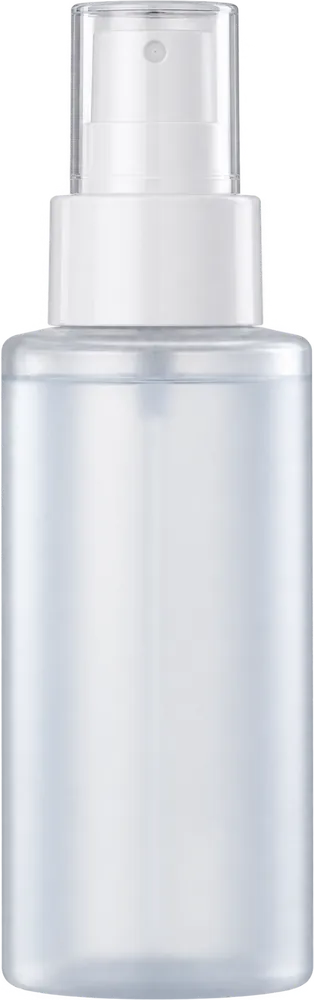
- Toner at 300
- $7.95
- At 1,000
- $6.32
- At 5,000
- $4.73
- Samples
- USD 150, credited
The short answer, and why it is not "yes" or "no"
Skincare has a high gross margin because the contents of a bottle cost little compared with what people pay for it. That part is true and you will see it below. But a brand is not a bottle. Between the factory price and your profit sit freight, duty, registration, marketplace or retail fees, payment fees, fulfilment and marketing, and the time your cash spends sitting in boxes. A brand is profitable when what is left after all of those pays for itself on the units you actually sell, not the units you ordered.
So the useful question is narrower: at your price, through your channel, how much does each unit leave you, and how many units do you need to sell before the order has paid for itself?
Step 1: the toner's price on our list
We use one product throughout: the Peptide Hydration Toner 100 ml, one of the 4 ready formulas on our private label route. The unit price includes the formula, a standard container and cap, your label printed in one color and a printed unit carton. It is quoted FOB Korea, so freight from the Korean port is yours.
Read moreShow less
| Order size | Unit price, FOB Korea | Arithmetic | Product total |
|---|---|---|---|
| 300 units | $7.95 | 300 × $7.95 | $2,385 |
| 1,000 units | $6.32 | 1,000 × $6.32 | $6,320 |
| 5,000 units | $4.73 | 5,000 × $4.73 | $23,650 |
Two one-time costs sit on our side. The sample round is USD 150, credited in full against your production order, so it costs you nothing if you order. Package design by our team is USD 200, optional and not credited; if you bring print-ready artwork it disappears. With design, what you pay us is $2,585 at 300 units, $6,520 at 1,000 and $23,850 at 5,000.
Payment on the product total is 50% when you order and 50% before shipment: $1,192.50 twice at 300 units, $3,160 twice at 1,000, and $11,825 twice at 5,000.
Step 2: retail multiples at 3×, 4× and 5×
The price calculator and our pricing guide express retail as a multiple of the FOB unit price. The same multiple means a very different shelf price depending on the tier you buy at:
Read moreShow less
| Order size | FOB unit price | 3 × FOB | 4 × FOB | 5 × FOB |
|---|---|---|---|---|
| 300 | $7.95 | $23.85 | $31.80 | $39.75 |
| 1,000 | $6.32 | $18.96 | $25.28 | $31.60 |
| 5,000 | $4.73 | $14.19 | $18.92 | $23.65 |
At every tier, 3× leaves 66.7% of the retail price above the FOB cost, 4× leaves 75% and 5× leaves 80%. Read the table the other way round and it is more useful: a toner on the shelf at $28 is 3.5 times FOB if you bought 300 units ($28 ÷ $7.95), 4.4 times at 1,000 ($28 ÷ $6.32) and 5.9 times at 5,000 ($28 ÷ $4.73). Your retail price is set by your market, not by your order size, so a larger order mostly moves you up the multiple at the same shelf price.
Step 3: the costs we do not quote
Here is where most profitability estimates go wrong. These lines are real, they are often larger than the product cost, and none of them is on our invoice.
Read moreShow less
| Cost | What we use below | Basis |
|---|---|---|
| Freight, insurance and import duty | $1.00 per unit | Illustrative assumption. Replace with your forwarder's quote and your broker's duty rate |
| Registration (CPSR, Responsible Person, CPNP, MoCRA and others) | Not included in the per-unit figures | Depends on the market; quoted at cost per project |
| Card payment fee, direct sales | 2.9% + $0.30 per sale = $1.11 at $28 | Stripe's published standard rate for domestic US cards |
| Amazon referral fee, beauty | 15% = $4.20 at $28 | Amazon's US fee page: 8% at a total sales price of $10.00 or less, 15% above $10.00, minimum $0.30 per item |
| Amazon selling plan | $39.99 per month, fixed | Amazon's US Professional plan; Individual is $0.99 per item sold |
| Retailer margin | You sell at $14 for a $28 shelf price | Keystone pricing, which Shopify describes as a retail price at twice the wholesale cost |
| Fulfilment to the end customer | $4.00 per unit | Illustrative assumption for pick, pack and delivery |
| Marketing per unit sold | $6.00 per unit | Illustrative assumption. This is the line that varies most between brands |
The three illustrative lines are there to make the arithmetic complete, not to tell you what your costs will be. A creator with an audience may spend almost nothing on marketing per unit; a new brand buying ads may spend more than the product cost. Amazon also charges fulfilment fees if you use FBA, by size and weight; we fold that into the $4.00 assumption rather than quote a rate we cannot fix for your product.
Step 4: what each toner leaves you, by channel
All three channels use the same example shelf price of $28. That price is an assumption for the arithmetic, not our recommendation.
Read moreShow less
Selling direct (your own website)
| Per unit | 300 units | 1,000 units | 5,000 units |
|---|---|---|---|
| Retail price | $28.00 | $28.00 | $28.00 |
| Our unit price, FOB Korea | −$7.95 | −$6.32 | −$4.73 |
| Freight and duty (illustrative) | −$1.00 | −$1.00 | −$1.00 |
| Card fee, 2.9% + $0.30 | −$1.11 | −$1.11 | −$1.11 |
| Fulfilment (illustrative) | −$4.00 | −$4.00 | −$4.00 |
| Marketing (illustrative) | −$6.00 | −$6.00 | −$6.00 |
| Left per unit | $7.94 (28.4%) | $9.57 (34.2%) | $11.16 (39.9%) |
Selling on Amazon
The card fee is replaced by the 15% referral fee, $4.20 on a $28 item:
| Per unit | 300 units | 1,000 units | 5,000 units |
|---|---|---|---|
| Left per unit | $4.85 (17.3%) | $6.48 (23.1%) | $8.07 (28.8%) |
The arithmetic at 300 units: $28.00 − $7.95 − $1.00 − $4.20 − $4.00 − $6.00 = $4.85. The $39.99 monthly plan comes on top as a fixed cost.
Selling through a retailer
With keystone pricing the retailer buys at half the shelf price, so you invoice $14. The retailer handles the end customer, so we leave fulfilment and marketing at zero here, which flatters this channel; in practice retailers often ask for testers and promotional support.
| Per unit | 300 units | 1,000 units | 5,000 units |
|---|---|---|---|
| Wholesale price | $14.00 | $14.00 | $14.00 |
| Our unit price and freight/duty | −$8.95 | −$7.32 | −$5.73 |
| Left per unit | $5.05 (36.1%) | $6.68 (47.7%) | $8.27 (59.1%) |
If every unit sells
| Order | Direct | Amazon | Retailer |
|---|---|---|---|
| 300 units | $2,182 | $1,255 | $1,315 |
| 1,000 units | $9,370 | $6,280 | $6,480 |
| 5,000 units | $55,600 | $40,150 | $41,150 |
Each cell is units × the amount left per unit, minus the USD 200 design fee: at 300 units direct, 300 × $7.94 − $200 = $2,182. These are before registration, the Amazon plan fee, photography, a website and your own time. They are also the best case: they assume you sell all of it at full price.
Step 5: the break-even formula
There are two break-even numbers, and small brands usually look at the wrong one.
Read moreShow less
Profit break-even = fixed costs ÷ amount left per unit. With only the USD 200 design as a fixed cost, the toner breaks even after 26 units direct at 300 ($200 ÷ $7.94, rounded up). That number is almost meaningless, because it ignores that you paid for all 300 units in advance.
Cash break-even is the one that matters:
Units to sell = cash paid out before selling ÷ cash received per unit sold
Cash paid out is the product total, the design fee, freight and duty on the whole order, registration and any other launch cost. Cash received per unit is the selling price minus the costs you pay per sale. Direct, that is $28.00 − $1.11 − $4.00 − $6.00 = $16.89.
| Order | Cash paid out (excl. registration) | Units to sell, direct | Share of the order |
|---|---|---|---|
| 300 | $2,385 + $200 + $300 = $2,885 | 171 | 57% |
| 1,000 | $6,320 + $200 + $1,000 = $7,520 | 446 | 44.6% |
| 5,000 | $23,650 + $200 + $5,000 = $28,850 | 1,709 | 34.2% |
On Amazon, with $13.80 received per unit ($28.00 − $4.20 − $4.00 − $6.00), the same orders need 210, 545 and 2,091 sales. Through a retailer at $14, they need 207, 538 and 2,061.
Registration is market-specific and quoted at cost, so add your quote to the cash paid out. As a rule of thumb from the same arithmetic, every USD 1,000 of extra fixed cost (registration, photography, launch ads) adds about 60 units to the direct break-even ($1,000 ÷ $16.89).
Step 6: cash tied up in inventory
The cheapest unit price is also the largest cheque, and it is written months before the first sale. The order runs like this: samples in about 2 weeks, then the 50% deposit, then 2 to 3 months of production with containers included, then the 50% balance before shipment, then freight and customs. From the first email to goods leaving Korea is roughly 3 to 4 months.
Read moreShow less
Now assume, purely for illustration, that you sell 100 toners a month once stock arrives:
| Order | Cash paid out | Months to sell out | Cash break-even reached in |
|---|---|---|---|
| 300 | $2,885 | 3 | Month 2 (unit 171) |
| 1,000 | $7,520 | 10 | Month 5 (unit 446) |
| 5,000 | $28,850 | 50 | Month 18 (unit 1,709) |
At 5,000 units each toner leaves the most, but at that sales rate your cash is out for a year and a half before it returns, and the last units would sit on a shelf for more than four years. Profit per unit and return on cash pull in opposite directions. Your sales rate decides which one wins, which is why the budget question comes before the price question. The budget planner shows the deposit and balance for any mix.
Step 7: reorder economics
The price list is per SKU and per order, so you are not locked into your first tier. A reorder normally needs no new sample round and no new design, which removes the one-time costs as well.
Read moreShow less
| Toner tier | Unit price | Change from 300 | Left per unit, direct at $28 |
|---|---|---|---|
| 300 | $7.95 | $7.94 | |
| 500 | $7.02 | −12% | $8.87 |
| 1,000 | $6.32 | −21% | $9.57 |
| 3,000 | $5.62 | −29% | $10.27 |
| 5,000 | $4.73 | −41% | $11.16 |
| 10,000 | $3.74 | −53% | $12.15 |
| 30,000 | $2.86 | −64% | $13.03 |
A staged path makes the trade-off visible. Ordering 300, then 1,000, then 3,000 toners buys 4,300 units for $25,565 ($2,385 + $6,320 + $16,860), an average of $5.95 per unit. Ordering 4,300 at once would land in the 3,000 tier at $5.62, or $24,166. The staged path costs $1,399 more, and in exchange you never hold more than one order's worth of unsold stock, and each reorder is sized on real sales.
That is the usual shape of a profitable small brand: a first order sized to learn, and reorders sized to what sold.
What makes the numbers work, and what breaks them
- Price for your channel first. The same toner leaves $9.57 direct and $6.48 on Amazon at 1,000 units. If you plan retail distribution, start from the $14 wholesale line, not the $28 shelf price.
- Know your marketing cost per unit. It is the largest number you control and the one most often left out. Before marketing, a $28 toner sold direct leaves $13.94 at 300 units and $17.16 at 5,000; spend more than that per unit sold and every sale loses money.
- Order for your sales rate, not the unit price. A larger tier lowers the cost of every unit, but only units you sell make money.
- Keep registration and freight on their own lines. Folding them into a unit price hides the costs that change by market and by shipment.
What gross margin does private label skincare have?
At the FOB unit price alone, a toner sold at 3, 4 or 5 times FOB keeps 66.7%, 75% or 80% of the retail price. After channel fees, freight, fulfilment and marketing, the examples in this article leave between 17.3% and 39.9% direct or on Amazon.
Is Amazon more profitable than selling on my own website?
Not per unit. The 15% beauty referral fee takes $4.20 of a $28 toner, against $1.11 in card fees direct. Amazon can still win if it brings customers more cheaply than your own marketing does, so compare marketing cost per unit, not only fees.
How many units do I need to sell to break even?
Divide the cash you paid out before selling by the cash you receive per unit sold. For 300 toners sold direct at $28 with the assumptions above, that is $2,885 ÷ $16.89, or 171 units, before registration.
Is it better to start with 300 units or 1,000?
1,000 units leave $1.63 more per toner at $28 and need a smaller share of the order to break even, but they tie up $7,520 instead of $2,885. If you do not yet know your sales rate, 300 units limits the risk; if you have a channel, 1,000 usually pays.
Do prices drop when I reorder?
Each order is priced per SKU at its own tier. A reorder of 1,000 toners is $6.32 per unit even if you started at 300, and it normally needs no new samples or design.
Why do you not include freight and registration in the unit price?
Because they depend on your market and shipment, and we would be guessing. Registration is quoted at cost per project and freight per shipment, so each sits on its own line.
Sources
Put your own price, channel and costs into the price calculator, then request a quote with your market so registration and freight go on their own lines.
Tell us what you want to make.
Send the product, market and quantity. You get a written quote and a formula route within 24 hours.