
Comparison
Korea vs China for cosmetics manufacturing: which one for your brand?
Both countries make most of the world's skincare for other people's brands. They are good at different things, and the honest comparison depends on your volume.
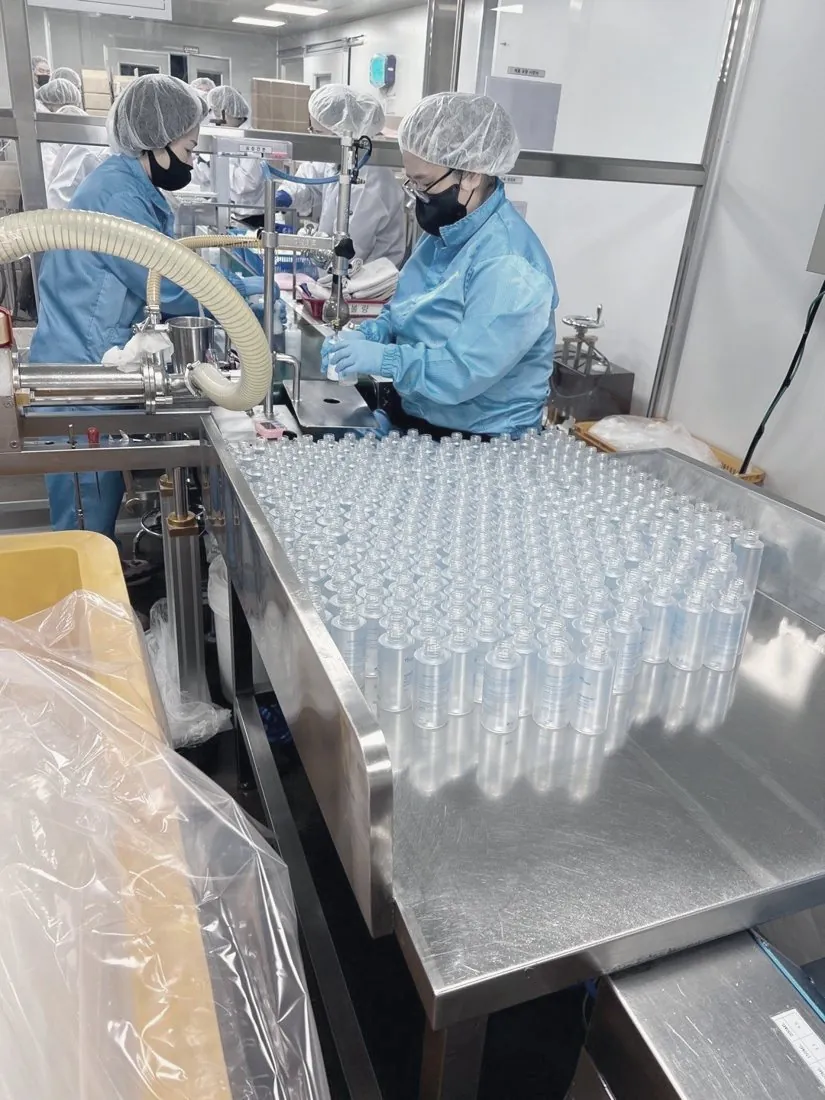
How do Korea and China compare at a glance?
| Korea | China | |
|---|---|---|
| Formula depth | Deep in skincare: barrier care, textures, actives such as peptides, ceramides, retinol, glutathione. Formulas are the export. | Strong in colour cosmetics, tools and packaging; skincare formulation catching up fast |
| Unit cost at low volume (300 to 5,000) | Competitive; a ready formula from $2.86 to $9.02 per unit across 7 tiers | Often higher for small runs, because lines are built for volume |
| Unit cost at very high volume (50,000+) | Higher | Lower, often significantly; this is where China wins |
| Minimum order | From 300 units (ready formula) and 1,000 (your own skincare formula, new or adjusted) at BIGPIE C&T; 5,000 for cleansers, body and hair care, makeup | Typically 5,000 to 10,000 per SKU for custom work; stock products lower |
| Regulatory reputation | Strong in the EU, US and Gulf; "Made in Korea" is a claim on the label | Perception varies by market; origin can be a question at retail |
| IP and exclusivity | Formula ownership agreed per contract; confidentiality generally respected | Agree exclusivity and ownership in writing; enforcement harder for a foreign brand |
| Duties into the EU | Duty-free under the EU–Korea FTA with origin declaration | Third-country rate for HS 3304 |
| Duties into the US | KORUS FTA; most HS 3304 duty-free, subject to additional tariffs in force | Subject to additional US tariffs on Chinese-origin goods |
| Lead time | Samples about 2 weeks; production 2 to 3 months including containers | Similar for samples; production often 1 to 3 months, longer around Chinese New Year |
| Packaging | Standard components domestic; custom moulds often sourced from China | The world's packaging supply chain; widest choice, lowest cost |
Where does Korea win?
Formula. The K-beauty category exists because Korean labs built textures and barrier-care formulas that consumers abroad wanted; the formula is the product. For a brand selling on how the product feels and performs, the lab matters more than the line.
Read moreShow less
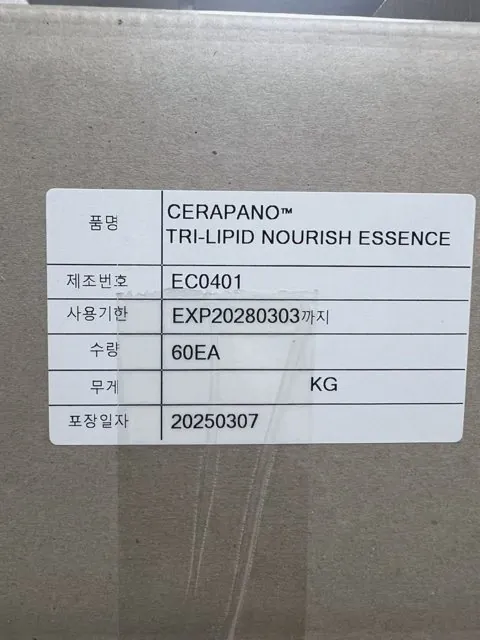
Small quantities. Korean partner lines run small batches as a business, not as a favour. Our private label route starts at 300 units per SKU with published prices, and your own skincare formula, new or adjusted, at 1,000. That is a first order of about $2,400 for a toner, which is hard to find at a volume-built line anywhere.
Market access. Korea has free trade agreements in force with the EU, the US, the UK, Canada, Australia and ASEAN. For most skincare under HS heading 3304 that means duty-free entry with a certificate of origin. Korean origin also carries weight on the shelf in the EU, the Gulf and Southeast Asia, where "Made in Korea" is a selling claim rather than a detail.
Regulatory data. Korea's cosmetics regulator (MFDS) runs a system close to the EU's, so Korean partner labs are used to producing the stability, microbiological and ingredient data that an EU safety assessor asks for. We notified our own 4 SKUs on CPNP on 2026-07-20 with that data.
Where does China win?
Unit cost at volume. At 50,000 units and above, Chinese lines and their packaging supply chain produce a lower landed cost on most mass-market products. A brand selling a $6 body lotion through discount retail will not beat that from Korea, and we say so when asked.
Read moreShow less
Packaging. Custom moulds, unusual containers, applicators, tools and gift sets are cheaper and faster from China. Korean manufacturers, including our partners, source many custom components there; what Korea adds is the formula and the filling.
Colour cosmetics at scale. Lipstick, palettes and tools in large shade ranges are a Chinese strength. Korean lip and colour minimums are 10,000 units per shade at our partners.
Speed for stock products. A white-label product already in a Chinese catalogue can ship in weeks. Korean stock products exist too (our 4 ready formulas), but the catalogues are smaller.
What does each one cost for a real order?
Two illustrations, using our published numbers for Korea. We do not publish Chinese prices because we do not sell them; the comparison is structural.
Read moreShow less
| Order | Korea (BIGPIE C&T private label) | China (structure, not a quote) |
|---|---|---|
| 1,000 × 100 ml toner, your label | $6.32 per unit, $6,320 FOB Korea, standard container and carton included | Many lines will not run 1,000 units of a custom formula; a stock formula may be cheaper per unit but with a 5,000 to 10,000 minimum |
| 50,000 × 100 ml toner, custom formula | Quoted per project; the toner's published tier at 30,000 is $2.86 | Likely lower per unit; container and carton cost falls further at this volume |
The crossover is between those two rows. Below about 5,000 units per SKU, Korea's small-batch lines and FTA access usually win on landed cost; well above 30,000, Chinese volume pricing usually wins unless the formula itself is the reason customers buy.
"In our experience at Cosmoprof, the buyers who move from China to Korea are not looking for a cheaper quote. They have a product that sells on texture and they want the formula that made it sell. The ones who move the other way have a product that sells on price. Both are right." — Minjae Lee, Head of Overseas Sales
What about regulation and trust?
Three points buyers raise, and the honest answer to each:
Read moreShow less
- Animal testing. China removed the pre-market animal testing requirement for most imported general cosmetics in 2021, subject to conditions; it still applies to some categories. This matters for brands selling into China, not for products made there and sold elsewhere. Korea bans animal testing of cosmetics with limited exceptions.
- Ingredient standards. Korea's MFDS and China's NMPA each keep lists of prohibited and restricted ingredients. For a product bound for the EU or US, the destination's rules apply regardless of where it is made; what differs is how used the lab is to producing the EU data package.
- Who makes it. In both countries, the company you email is often not the company that makes the product. Ask. We do not own a factory; we work with 34 partner manufacturers in Korea and say so on every page. Ask the same question of any Chinese supplier.
Which should you choose?
| Choose Korea if | Choose China if |
|---|---|
| Your product sells on formula, texture or a Korean origin claim | Your product sells on price, packaging or a large shade range |
| Your first order is under 5,000 units per SKU | Your orders are 50,000 units and up |
| You sell in the EU, the US, the Gulf or Southeast Asia | You sell mainly in China or in price-led channels |
| You want the EU safety data package from a lab that produces it routinely | You need custom packaging, tools or sets with the product |
| You plan to grow a line from 300 to 30,000 on the same formula | You already have a formula and need the cheapest line to run it |
Many brands do both: formula and skincare from Korea, packaging components and colour cosmetics from China. Our partners source custom components from China when the project needs them.
Is Korean cosmetics manufacturing more expensive than Chinese?
At very high volume, usually yes per unit. At small and medium volume (300 to 5,000 units) Korean small-batch lines are often competitive, and duty-free entry into the EU and US under Korea's FTAs can make the landed cost lower.
What is the minimum order in Korea vs China?
At BIGPIE C&T, 300 units for a ready formula and 1,000 for your own skincare formula, new or adjusted. Cleansers, body and hair care and makeup start at 5,000. Chinese custom work typically starts at 5,000 to 10,000 per SKU; stock products can be lower in both countries.
Are Korean cosmetics duty-free in the EU?
Most cosmetics under HS 3304 of Korean origin enter the EU duty-free under the EU–Korea FTA with an origin declaration. VAT still applies.
Is quality better in Korea or China?
Both countries have excellent and poor lines. Quality comes from the specific facility and the checks on the order, not from the flag. Ask which facility makes your product and what is checked at each stage; ours is six stages on every lot.
Can I make the formula in Korea and the packaging in China?
Yes, and it is common. Our partners source custom containers and components from China when the project needs them; the formula, filling and quality checks stay in Korea.
Sources
Not sure which side of the crossover you are on? Send your quantity and product and we will tell you whether Korea makes sense before you pay for samples.
Tell us what you want to make.
Send the product, market and quantity. You get a written quote and a formula route within 24 hours.