
Guide
Selling Korean skincare in the USA: what MoCRA changed
The Modernization of Cosmetics Regulation Act gave the FDA powers it never had over cosmetics. Here is what it asks of a Korean-made product, what we supply, and why sunscreen is a different animal.
What is MoCRA?
The Modernization of Cosmetics Regulation Act of 2022 is the first major change to US cosmetics law since 1938. Before it, cosmetics did not need to be registered or listed, and the FDA could not order a recall. MoCRA added five obligations that matter to an importer of Korean skincare:
Read moreShow less
| Obligation | Who | What it means in practice |
|---|---|---|
| Facility registration | The manufacturer (the partner line in Korea) | Each facility that makes a cosmetic for the US market registers with the FDA and renews every 2 years |
| Product listing | The responsible person | Each product is listed with the FDA, with its ingredients and the facility that makes it, and updated annually |
| Responsible person | The manufacturer, packer or distributor named on the label | Keeps a US address or contact, receives adverse event reports, holds safety substantiation |
| Adverse event reporting | The responsible person | Serious adverse events are reported to the FDA within 15 business days |
| Safety substantiation | The responsible person | Adequate evidence that the product is safe, kept on file |
Two more pieces are in the Act and are being implemented by the FDA through rulemaking: good manufacturing practice requirements for facilities, and fragrance allergen labelling. Check the FDA's MoCRA page for the current status before you print labels.
Who is the responsible person for an imported product?
The name on the label. If your brand's name and US address appear on the package, your company is the responsible person. If your US distributor's name is there, they are. This is a business decision to make before the artwork is final, because it also decides who lists the product and who receives adverse event reports.
Read moreShow less
| If the label names | Responsible person | Lists the product | Receives complaints |
|---|---|---|---|
| Your brand with a US address | You | You | You |
| Your brand with a non-US address and a US agent | You, with the agent as contact | You | Your agent forwards to you |
| Your US distributor | Your distributor | Your distributor | Your distributor |
A Korean manufacturer is not the responsible person for your product in the US. What the manufacturer owns is the facility registration: the partner line that makes your product must be registered, and its registration status is one of the questions to ask before you choose a manufacturer.
What does BIGPIE C&T supply?
| We supply | You or your distributor do |
|---|---|
| The facility registration status of the partner manufacturer chosen for your project | Decide the responsible person on the label |
| Product listing data: product name, category, full ingredient list, facility | Submit the listing to the FDA (Cosmetics Direct) and update it |
| Label review: identity, net quantity, ingredient declaration, name and place of business, warnings | Final label approval |
| Formula data, stability and microbiological results for your safety substantiation file | Keep the safety substantiation on file |
| Export documents and certificate of origin for KORUS FTA treatment | Import clearance, adverse event process |
We do not register your product or act as your responsible person; the cost of any US agent or listing service you use is quoted at cost, separate from the unit price.
What must a US cosmetic label carry?
The basics predate MoCRA and come from the FD&C Act, the Fair Packaging and Labeling Act and 21 CFR 701:
Read moreShow less
- Identity of the product on the principal display panel
- Net quantity of contents, in US customary units and metric
- Ingredient declaration in descending order of predominance, using the names established by regulation (INCI-based)
- Name and place of business of the manufacturer, packer or distributor
- Warnings where required, and the "Warning: the safety of this product has not been determined" statement if safety has not been adequately substantiated
- Any material facts the consumer needs for safe use
MoCRA adds the responsible person's contact for adverse event reporting, and the fragrance allergen disclosure once the FDA's rule is in force. We review your artwork against this list; the final decision is yours or your US counsel's.
Why is sunscreen different?
In the US, sunscreen is an over-the-counter (OTC) drug, not a cosmetic. It must comply with the FDA's sunscreen monograph: only listed UV filters at allowed levels, SPF and broad-spectrum testing by the FDA's methods, drug facts labelling, and manufacture at a facility operating under drug GMP. A moisturiser with SPF is a drug too.
Read moreShow less
That is why our minimum for a sunscreen bound for the US is 10,000 units and cannot be reduced: the partner lines that run under drug GMP for the US run in that batch size, and the testing cost per batch makes smaller runs uneconomical. A tinted serum, a cream or a toner stays a cosmetic and starts at 300 units on the private label route.
"In our experience, the first question from a US buyer at a trade show is 'do you make sunscreen', and the second, after we explain the 10,000 minimum and the OTC testing, is 'what else do you make'. Korean sunscreens are famous, but the filters that make them pleasant are not all approved in the US, and the ones that are need a drug-grade line." — Minjae Lee, Head of Overseas Sales
What should you ask a Korean manufacturer before a US launch?
Ask these before samples, and get the answers in writing rather than as an assurance:
Read moreShow less
- Facility registration. Is the facility that will make my product registered with the FDA for cosmetics, and what is the registration number?
- Ingredient data. Can you supply the full ingredient list in the form the product listing needs?
- Substantiation data. Which stability, preservative efficacy and microbiological results can you provide for my safety file?
- Manufacturing practice. Which good manufacturing practice standard does the facility follow, and can you give a written statement of it?
- Batch records. If a consumer reports a reaction, which batch records can you retrieve for a lot number, and for how long are they kept?
Tell us the US is your market when you request a quote, and the answers for the partner line planned for your project come with the quotation.
What adverse event process do you need?
MoCRA puts this on the responsible person, so it sits on your side, not in the manufacturer's contract. In practice it means:
Read moreShow less
- A contact on the label (US address, phone number or website) that someone actually monitors.
- A log of every adverse event report received, serious or not. Records are kept for 6 years (3 years for qualifying small businesses).
- Someone who knows the 15-business-day rule for serious events and how to submit a report to the FDA.
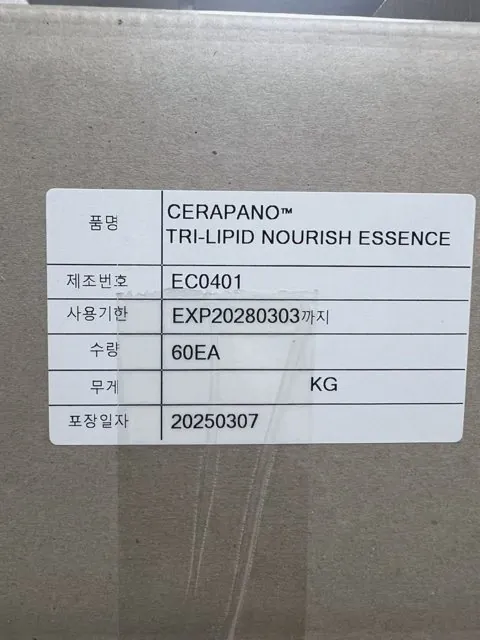
- The lot number on every unit, so a report can be traced to a batch. Ours is printed on the carton label.
Build this before launch. Assembling it after the first complaint arrives is the wrong time.
What about duties into the US?
Most skincare under HS heading 3304 is duty-free into the US, and the KORUS FTA covers Korean-origin cosmetics with a certificate of origin. Additional tariffs have been applied and changed by the US several times since 2018; confirm the rate in force for your HS line with a customs broker before you price, and ask us for the certificate of origin with the shipment.
Checklist for a US launch
Under MoCRA (2022) the facility that manufactures the product registers with the FDA and each product is listed; the brand named on the label is the responsible person for adverse event reporting and safety substantiation. Sunscreen is an OTC drug with its own rules.
- You / importer
- BIGPIE C&T
- You / importer
- BIGPIE C&T
- You / importer
- BIGPIE C&T
Duty and tax: Most skincare under HS 3304 is duty-free into the US; confirm the current rate and any additional tariffs with a customs broker before pricing.
Sources: Modernization of Cosmetics Regulation Act of 2022 (MoCRA), U.S. FDA · Cosmetics labeling guide, U.S. FDA · Sunscreen: how to safely use, and FDA regulation, U.S. FDA
Do I need FDA approval to sell Korean skincare in the US?
No. Cosmetics are not approved by the FDA. Under MoCRA the facility registers, the product is listed, and the responsible person keeps safety substantiation. Sunscreen is the exception: it is an OTC drug with its own rules.
Who registers the facility, you or me?
The facility. The partner manufacturer that makes your product holds its own FDA facility registration. We tell you the status of the line planned for your project.
Can I use my brand name and a Korean address on the label?
The label needs the name and place of business of the responsible person. If that is your brand with a non-US address, you need a US contact for adverse event reports. Many brands use their US distributor or a US agent. Ask your US counsel.
Is a 10,000-unit sunscreen order the minimum for every market?
10,000 is the US minimum because of OTC drug rules. Sunscreen for other markets has its own minimum on the partner line; ask with the destination named.
Does each SKU need its own product listing?
Yes, listing is per product, not per brand: a 4-SKU range is normally 4 listings. MoCRA allows one listing to cover products with identical formulas, or formulas that differ only in colour, fragrance or quantity, so shades of one formula can share a listing.
Is FDA registration the same as FDA approval?
No. Facility registration and product listing are notifications. The FDA does not review or approve a cosmetic before sale; responsibility for safety stays with the responsible person.
What is Cosmetics Direct?
The FDA's electronic portal for facility registration and product listing under MoCRA. Listings are submitted there by the responsible person or an agent.
Do you handle the product listing for me?
No. We supply the listing data. The responsible person, or an agent they appoint, submits it. Any agent fee is quoted at cost, separate from the product.
Sources
- Modernization of Cosmetics Regulation Act of 2022 (MoCRA), U.S. FDA
- Registration and listing of cosmetic product facilities and products, U.S. FDA
- Cosmetics labeling guide, U.S. FDA
- Sunscreen: how to help protect your skin from the sun, and FDA regulation of sunscreen, U.S. FDA
- KORUS FTA, Office of the United States Trade Representative
Planning a US launch? Send your brief with the responsible person you have in mind, and we will confirm the facility status and listing data before samples.
Tell us what you want to make.
Send the product, market and quantity. You get a written quote and a formula route within 24 hours.